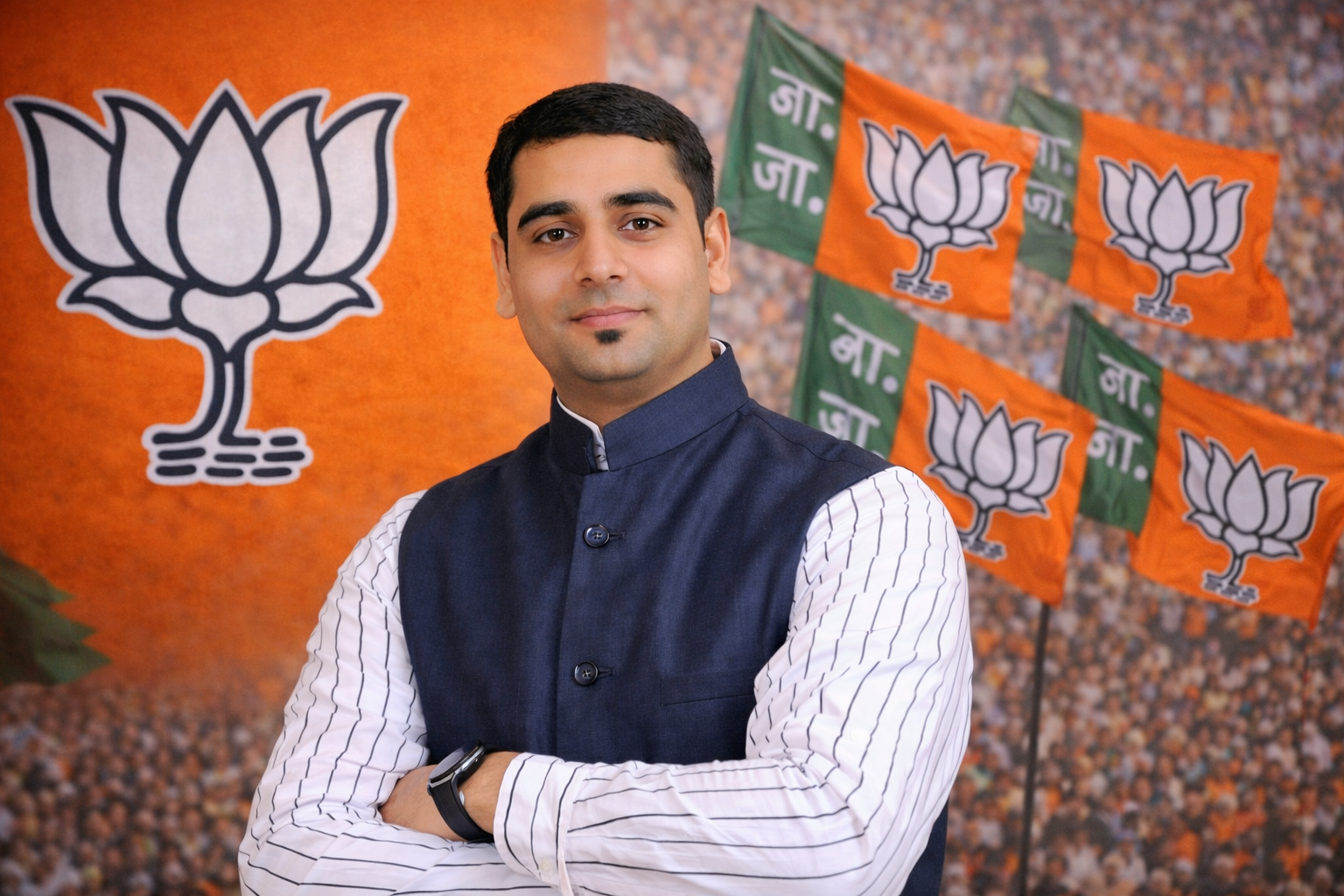
Ravi Tiwari:Digital Strategist to Grassroots Mobiliser
Ravi Tiwari represents a category of emerging political leaders who operate at the intersection of grassroots mobilisation and digital strategy within Delhi politics. Identified as a young and active face in the Delhi unit of the Bharatiya Janata Party (BJP), he has steadily built influence through organisational discipline, IT cell coordination, youth engagement initiatives, and participation in local election campaigns. His rise reflects a broader transformation within party politics where digital infrastructure, social media narratives, booth-level management, and rapid-response communication systems are as important as traditional public rallies and door-to-door outreach.
Unlike high-profile electoral candidates who gain visibility through legislative office, Ravi Tiwari’s political footprint has been shaped through organisational architecture. Within Delhi BJP’s ecosystem, young leaders often begin by taking responsibility for local coordination — managing volunteer databases, event logistics, social media pages, and campaign analytics. Tiwari’s involvement in IT cell coordination is particularly significant in contemporary politics. In a capital city where political debates unfold intensely across digital platforms, IT cells function as communication nerve centres, shaping messaging, countering opposition narratives, and amplifying party achievements in real time.
His grassroots engagement complements this digital proficiency. Delhi’s political structure demands micro-level engagement at ward and assembly segments, where issues such as sanitation, water supply, housing, traffic congestion, and employment intersect with national political themes. Tiwari’s work in local BJP campaigns involves connecting these everyday concerns with broader party narratives. By participating in local meetings, youth drives, and public grievance forums, he bridges the gap between ideological messaging and lived realities of residents.
Youth mobilisation remains central to his political profile. As a young leader himself, Tiwari connects naturally with first-time voters, college students, startup entrepreneurs, and digital freelancers — demographics that are expanding rapidly in Delhi. Through targeted outreach campaigns, volunteer recruitment initiatives, and digital awareness drives, he contributes to strengthening BJP’s youth base in the capital. His approach underscores the importance of peer-level communication; younger voters are often more responsive to leaders who reflect their generational language, aspirations, and communication styles.
The IT cell dimension of his role deserves special attention. Modern political campaigns rely heavily on structured digital ecosystems: content creation teams, graphic designers, short-video producers, analytics monitors, and rapid rebuttal units. Coordination of such teams requires not only technical skills but also political sensitivity — understanding which issues resonate locally, which narratives require amplification, and how to maintain consistency with national party messaging. In Delhi, where media scrutiny is constant, disciplined digital communication becomes even more critical. Tiwari’s involvement in these systems indicates familiarity with data-driven campaigning and online engagement metrics.
Election cycles in Delhi are intense and highly competitive. During assembly or municipal polls, leaders like Tiwari function as operational catalysts. They mobilise booth-level volunteers, oversee campaign logistics, ensure voter contact programmes run smoothly, and coordinate between local candidates and central leadership. Campaign management at this level is demanding and often invisible to the general public, yet it forms the backbone of electoral success. His experience in these operational aspects enhances his credibility within the party organisation.
Beyond election management, Ravi Tiwari’s profile reflects the evolving structure of political leadership pathways. In earlier decades, leadership often emerged from student unions or traditional cadre systems alone. Today, technological literacy and communication agility are equally valued. Leaders capable of integrating field mobilisation with digital influence hold strategic importance. Tiwari’s dual engagement in IT cell work and ground-level outreach aligns with this hybrid model of political organisation.
Public perception of such emerging leaders depends on authenticity and accessibility. Grassroots leaders who remain approachable — attending local events, responding to community issues, and maintaining open communication channels — build trust over time. Delhi’s urban voter base expects prompt responsiveness, especially in the age of instant messaging and online grievance reporting. Leaders who adapt to this expectation position themselves as modern representatives attuned to contemporary civic culture.
Policy engagement is another area where young organisers can expand influence. While much of Tiwari’s work centres on mobilisation and coordination, sustained growth in political stature often involves policy articulation. Engaging with issues such as youth employment, digital entrepreneurship, skill development, urban infrastructure, and startup incubation can transform an organisational profile into a policy-oriented one. Delhi, with its blend of urban challenges and national policy presence, offers ample scope for such engagement.
Internal party dynamics also shape career trajectories. Within BJP’s structured hierarchy, consistent performance in organisational roles often leads to expanded responsibilities. Leaders who demonstrate reliability, strategic clarity, and ability to manage volunteers effectively are entrusted with larger mandates. Tiwari’s ongoing role in youth organisation and IT coordination positions him within that evaluative framework, where sustained contribution can translate into broader leadership opportunities.
Challenges in digital-age politics are considerable. Online spaces are competitive and polarised; misinformation spreads rapidly, and reputational risks are constant. IT cell coordinators must balance assertive messaging with factual discipline. Navigating these complexities requires adaptability and strategic foresight. Leaders like Tiwari, operating in this environment, must continuously refine communication practices to maintain credibility.
Another dimension of his political environment is Delhi’s symbolic importance. As the national capital, political actions here reverberate beyond local boundaries. Youth mobilisation strategies piloted in Delhi often influence approaches in other states. Consequently, leaders who demonstrate innovation in outreach or campaign coordination in Delhi contribute indirectly to broader party experimentation nationwide.
Community engagement remains foundational. Participation in social service activities — cleanliness drives, blood donation camps, public awareness programmes, and disaster relief efforts — strengthens grassroots legitimacy. Such initiatives reinforce the perception that political work extends beyond elections into sustained civic participation. For emerging leaders, involvement in community service can deepen trust and widen volunteer networks.
From an analytical standpoint, Ravi Tiwari represents the archetype of the “organisational modernist” in Indian politics — a leader whose influence is built less on personal charisma alone and more on systematic coordination, technological integration, and structured mobilisation. This model reflects a wider shift within parties seeking to professionalise campaign management and youth engagement.
Looking ahead, the trajectory of leaders like Tiwari will depend on multiple factors: continued performance in organisational roles, ability to articulate policy positions, cultivation of constituency-level presence, and adaptation to evolving political narratives. If these dimensions converge effectively, they can pave the way for formal candidature or expanded leadership responsibilities within Delhi BJP.
For platforms such as Indianpoliticians.in, profiling Ravi Tiwari provides readers with insight into the machinery behind electoral politics. It highlights how modern political ecosystems depend not only on headline leaders but also on disciplined organisers who sustain party operations daily. His journey underscores the importance of technological literacy, youth engagement, and grassroots coordination in shaping Delhi’s political future.
In conclusion, Ravi Tiwari exemplifies a new generation of BJP leaders in Delhi who blend digital strategy with field mobilisation. His work in youth organisation, IT cell coordination, and local campaign management positions him as a growing influencer within the party’s capital unit. As Delhi’s political landscape continues to evolve, figures like him will likely play increasingly significant roles in shaping both campaign dynamics and long-term organisational growth.