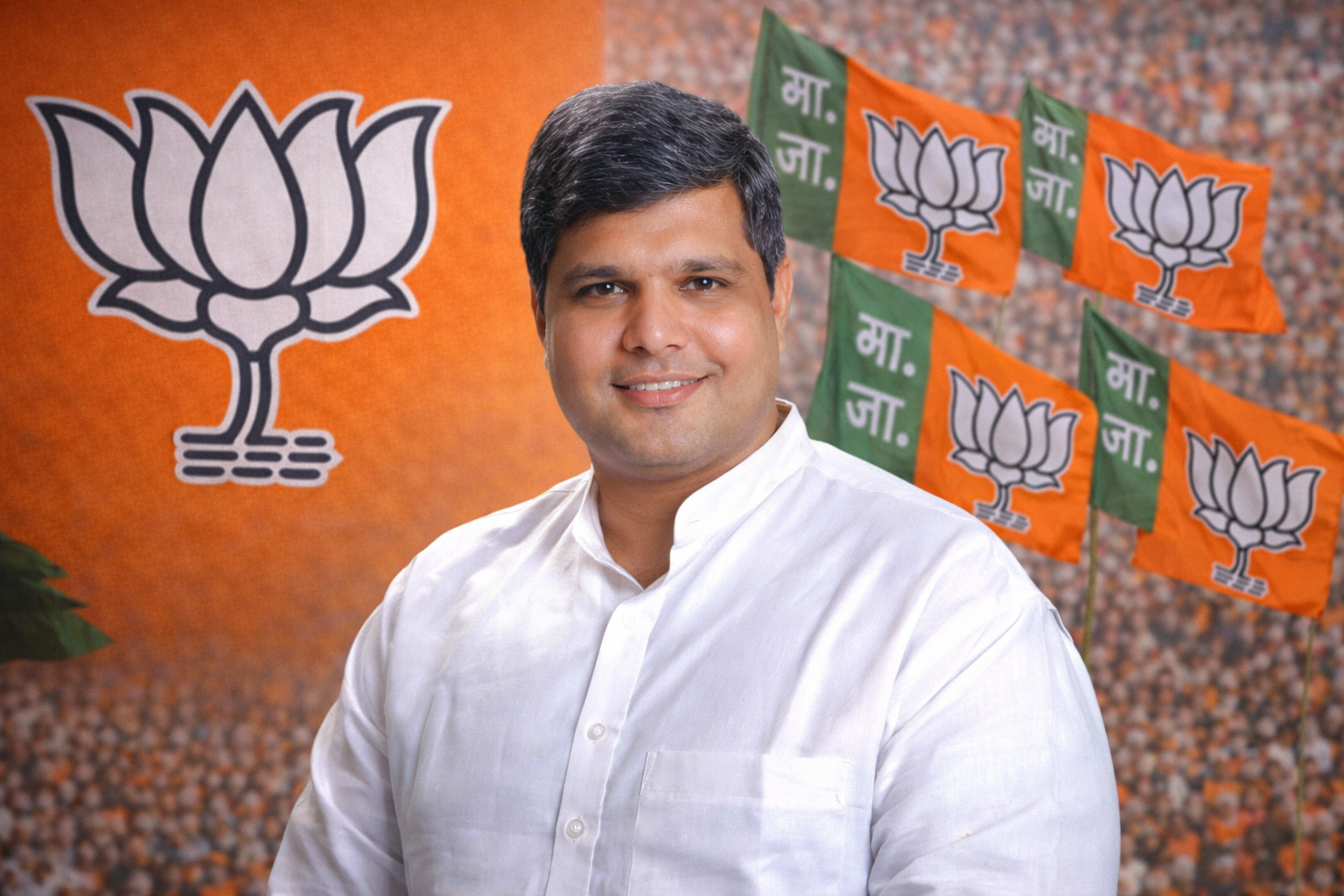
Sagar Tyagi -Youth Mobilisation Architect
Shri Sagar Tyagi has emerged as one of the prominent young organisational faces in Delhi politics through his role as State President of Bharatiya Janata Yuva Morcha (BJYM) Delhi, the youth wing of the Bharatiya Janata Party. At a time when political parties are increasingly focused on energising first-time voters, campus communities, startup professionals, and digitally connected youth, his leadership represents a strategic generational investment by the BJP in the national capital. His journey reflects the layered structure of party-building in India, where organisational dedication, grassroots outreach, ideological alignment, and communication skills together shape a political career long before electoral candidacy becomes a possibility.
Sagar Tyagi’s rise within the BJYM structure is rooted in sustained organisational work rather than sudden visibility. Youth wings in Indian political parties serve as training grounds for future legislators, spokespersons, and ministers. They are responsible for mobilising volunteers, coordinating campaign activities, leading issue-based protests, organising youth conventions, and amplifying party messaging on campuses and digital platforms. As State President of BJYM Delhi, Tyagi occupies a pivotal role within this ecosystem. He oversees district-level units, coordinates with the BJP Delhi state leadership, and ensures that youth engagement strategies align with the broader political objectives of the party in the capital.
Delhi presents a uniquely complex political landscape. As India’s capital, it is both a city-state and the centre of national governance. Political narratives here are shaped not only by local civic issues—such as infrastructure, pollution, water supply, employment, and municipal services—but also by national debates. For a youth wing leader, this dual character of Delhi demands agility. Tyagi’s responsibilities therefore extend beyond conventional youth mobilisation; they include participation in issue campaigns that connect local grievances with national policy positions, thereby reinforcing party coherence across levels of governance.
One of the defining aspects of Tyagi’s leadership has been youth outreach through structured programmes. BJYM Delhi regularly organises membership drives, leadership workshops, training camps, policy discussions, and campus engagements. These programmes are designed not only to expand numerical strength but also to cultivate disciplined cadres who understand party ideology, governance priorities, and communication strategy. Under Tyagi’s stewardship, such activities aim to create a pipeline of young leaders capable of representing the BJP in future elections, media debates, and public forums.
In contemporary politics, digital presence is no longer optional. Youth engagement increasingly unfolds on social media platforms where narratives are formed, contested, and amplified within hours. As a youth wing president in the capital, Tyagi’s political work intersects strongly with digital mobilisation. Campaigns relating to national events, youth employment, civic issues, and ideological themes are often coordinated simultaneously through physical gatherings and online outreach. The ability to combine street-level activism with digital amplification strengthens organisational impact and widens reach beyond immediate constituencies.
Another dimension of Tyagi’s leadership lies in event-based mobilisation. BJYM Delhi frequently participates in commemorative programmes such as National Youth Day, Independence Day initiatives, and policy awareness campaigns. These events serve multiple purposes: reinforcing ideological identity, fostering community bonding among volunteers, and projecting youth dynamism to the wider electorate. Tyagi’s public appearances at such events position him as a representative of energetic, disciplined youth politics aligned with the BJP’s broader national narrative.
Leadership within a youth wing also demands negotiation skills. The state president operates between district coordinators, national BJYM leadership, and the BJP Delhi unit. Managing expectations across these layers requires balancing ambition with discipline. Youth wings are often composed of highly motivated individuals seeking visibility and growth; channeling that energy productively is central to effective organisational leadership. Tyagi’s ability to maintain cohesion while expanding outreach influences both the morale of cadres and the public image of the youth wing.
In Delhi’s competitive political environment, youth engagement has become a battleground for narrative influence. With a large student population across universities and private institutions, as well as a growing number of young professionals in technology, services, and entrepreneurship, the capital’s demographic profile creates opportunities for ideological persuasion and issue-based mobilisation. Tyagi’s BJYM leadership operates in this context, seeking to frame national policies—whether related to entrepreneurship schemes, digital infrastructure, or youth empowerment initiatives—as beneficial to Delhi’s young population.
Grassroots activism remains an important component of BJYM’s operational model. Youth wing leaders frequently participate in protests, signature campaigns, and awareness drives on matters such as corruption allegations, civic grievances, or national security concerns. Through such activities, Tyagi’s leadership attempts to position BJYM as both responsive and proactive. Visibility in public spaces reinforces the perception that the youth wing is engaged in everyday political life rather than limited to ceremonial functions.
A significant part of Tyagi’s political trajectory involves ideological alignment. Youth wings are often responsible for cultivating ideological clarity among members, ensuring that emerging leaders understand the philosophical foundations of the parent party. In the case of BJYM, this includes themes of nationalism, governance reform, economic development, and cultural identity. As state president, Tyagi’s role includes mentoring younger activists and maintaining consistency in messaging across events and platforms.
Gender inclusion and representation are increasingly central to youth politics. Effective youth leadership in Delhi must encourage participation from women members and ensure safe, inclusive organisational spaces. BJYM’s expansion efforts often highlight the involvement of women leaders and student representatives. Sustaining such inclusion enhances organisational credibility and broadens appeal among young voters who prioritise equity and representation.
Electoral strategy also intersects with youth wing work. During assembly or municipal elections, BJYM cadres become campaign multipliers—conducting door-to-door outreach, managing booth-level operations, and amplifying digital messaging. As BJYM Delhi president, Tyagi plays a coordinating role in aligning youth volunteers with official campaign machinery. This operational synergy is critical in tightly contested constituencies where margin-based mobilisation can influence outcomes.
Critically, youth wing leadership is often a precursor to formal electoral candidature. Many established politicians across parties began their careers in student unions or youth wings. Tyagi’s organisational experience, if combined with constituency-level engagement and policy advocacy, could position him for future electoral roles. However, such progression depends on sustained performance, internal party evaluation, and the evolving political dynamics of Delhi.
Challenges remain inherent in youth politics. Sustaining volunteer enthusiasm beyond high-visibility events requires continuous engagement and tangible outcomes. Young activists expect mentorship, growth opportunities, and recognition. Managing these expectations while maintaining discipline is essential. Additionally, navigating public scrutiny—particularly in the age of viral content—demands careful communication and transparency.
Policy engagement is another evolving frontier for youth wing leaders. Beyond mobilisation, effective youth leadership increasingly involves policy literacy—understanding legislative proposals, governance structures, and budgetary processes. For Tyagi, expanding BJYM Delhi’s role in policy discussions—such as roundtables on employment, entrepreneurship, education reform, or urban development—could enhance intellectual credibility and broaden appeal among educated youth.
Delhi’s symbolic importance amplifies every political action. Being headquartered in the national capital, BJYM Delhi’s activities are often observed by national leadership and media. This visibility provides opportunity but also responsibility. Any innovation in youth outreach here can become a template for other states; conversely, missteps can attract disproportionate attention. Tyagi’s leadership thus operates under a spotlight that demands strategic foresight.
Looking forward, the success of leaders like Sagar Tyagi will be measured by organisational depth rather than episodic visibility. Expanding membership numbers, building structured training systems, nurturing district-level leadership, and maintaining consistent community engagement are long-term indicators of effectiveness. Youth politics is sustainable when it produces leaders who transition into governance roles with preparedness and credibility.
For a platform like Indianpoliticians.in, profiling Sagar Tyagi offers insight into how contemporary youth wings function as incubators of political leadership. His journey illustrates the importance of disciplined organisational work in shaping political futures. While electoral prominence may still lie ahead, his current role demonstrates the strategic significance of youth mobilisation in Delhi’s evolving political theatre.
In essence, Shri Sagar Tyagi embodies a new generation of party organisers who understand that political influence today is built through a combination of grassroots activism, digital communication, ideological clarity, and structured leadership development. Whether his trajectory leads to legislative office or continued organisational leadership, his work within BJYM Delhi underscores the central role youth engagement plays in shaping the next chapter of politics in India’s capital.