Anupam — the youth leader remaking the political conversation under the banner of Indian National Congress
Anupam’s story reads like a deliberate break from a conventional life path into a public life dedicated to youthful causes, an arc that helps explain both his appeal and the strategic calculus behind his recent entry into mainstream national politics. Born in a small town in the Kosi region of Bihar and educated as an engineer, Anupam left a secure corporate track to become a full-time social activist, building a public profile around a simple, urgent proposition: that India’s youth—facing unemployment, unpredictable education-to-employment pipelines, and a growing sense of exclusion—deserve organised, persistent political voice and policy-focused advocacy. That choice to trade economic security for public service has been central to his personal narrative and useful politically: it positions him as someone who “walked away” from private comfort to champion collective problems, and it gives his leadership credibility among young Indians who are themselves weighing similar tradeoffs between secure careers and social purpose.
Long before joining a national party, Anupam built his political capital by organising around tangible, youth-centric issues. He founded Yuva Halla Bol, a youth movement that tied together disparate local protests, job-seekers’ campaigns, and education-rights activism into an identifiable national platform. Through that platform he and his collaborators organised mass actions, public dialogues, and judicial and administrative petitions on issues ranging from fair recruitment and employment transparency to student welfare and environmental concerns in small towns and peri-urban belts. The organisational muscle of Yuva Halla Bol was never meant merely to stage protests; Anupam pursued a dual strategy of agitation plus policy proposals—drafting clear demands and using media to push those demands into public debate. That combination of street presence and policy framing made him a recognizable face on television debates and social media conversations about youth unemployment and governance gaps, which in turn opened doors for larger institutional engagement.
His background—technical training, early corporate exposure, and then full-time activism—helps explain the tonal mix he brings to public life: he speaks fluently in policy registers, but he also codesigns campaigns that are digitally native and emotionally resonant. This hybrid skill set turned him into a useful interlocutor for media and party strategists alike: he could translate complex administrative failures into compelling narratives for citizens while also sketching technical policy steps for officials. That is one reason national parties pay attention to leaders like him—because they fill a gap between the old political instincts of personality and the new political requirement for programmatic detail. His social media channels, where he communicates in Hindi and regional dialects as well as in English, have been central to this outreach strategy; they let him communicate quickly, test messaging, and mobilise volunteers across state lines.
The decision to join the national party was not abrupt. For several years Anupam and his movement occupied a space typical of modern civic politics: they were a force for mobilisation but lacked the institutional mechanisms that convert protest energy into legislative influence and budgetary wins. Joining a national party—which officially welcomed him into its fold at a public ceremony attended by senior leaders—was framed by him and by party spokespeople as a strategic step to embed youth demands within mainstream policy debates. For the party, inducting a visible youth leader offered a twofold advantage: it signalled openness to fresh leadership while also potentially connecting the party to networks of young volunteers and activists who had proved effective at local mobilisation. For Anupam, the move offered access to organisational resources, legislative platforms, and the possibility of influencing the party’s youth and labour agendas from within. Several credible press reports and the party’s own communications confirm that his induction was welcomed at high levels of the party hierarchy.
Understanding Anupam’s strengths requires appreciating the mix of credibility he has cultivated. First, his activist résumé gives him authenticity among sections of youth who are tired of performative gestures and want leaders who have “been on the ground.” Second, his media presence—built over years of television appearances and digital campaigns—gives him the visibility that is often scarce for mid-level party organisers. Third, his technical background allows him to speak credibly about employment schemes, digital job matching platforms, and governance reforms in a language that officials and technocrats can understand. These three traits combine into a political persona that is comfortable in protest spaces, debate panels, and policy rooms—an unusually flexible profile in contemporary Indian politics.
But his rise also highlights classic constraints. Organisational depth remains a central test: movements can be spectacularly good at concentrated bursts of mobilisation, but converting that into vote-winning structures requires candidate grooming, cadre training, and constituency networks—things that are time-intensive and expensive. As a new entrant within a large party, Anupam will have to navigate internal hierarchies, local power equations, and the pragmatic tradeoffs that come with coalition politics. The skills that make you an effective agitator—moral clarity, rapid mobilising capacity, and uncompromising public critique—are not always the same skills that make you an effective administrator or party manager, which often require patient compromise and coalition building. How Anupam adapts to those realities will determine whether his early momentum consolidates into long-term political influence or dissipates into episodic prominence.
Policy orientation is where Anupam’s political identity is clearest. From the start his advocacy emphasized employment and fair recruitment—issues that resonate deeply in states where educated young people face prolonged joblessness and opaque hiring practices. His movement’s signature demands—transparent job advertisements, merit-based shortlisting, and grievance redressal mechanisms for failed recruitment drives—speak to a constituency that is technical, aspirational, and highly networked. He has also foregrounded education access, linking the quality of higher education and vocational training to employability outcomes, and has been vocal on environmental quality in small towns—air, water, and sanitation—recognising that quality of life issues matter as much to young families as headline economic metrics. This combination of employment, education, and environment is strategically smart: it creates a broad appeal across urban, semi-urban, and rural youth cohorts while allowing for targeted local campaigns that can produce visible short-term wins.
Communication style matters in the politics of the present, and Anupam’s approach is calibrated for a media ecosystem that privileges fast, relatable content. He uses short, sharable videos, live Q&A sessions, and hyperlocal reporting from field visits to show both empathy and competence. He’s careful to package complex policy demands in relatable frames—stories of families affected by hiring scams, videos from job-seeker queues, or explainers on how bureaucratic delays cost livelihoods. This narrative strategy does two things: it builds grassroots sympathy, and it creates pressure on officials by turning administrative bottlenecks into reputational liabilities. Yet this same media visibility brings intensified scrutiny; every inconsistency, strategic misstep, or coordination failure is potentially amplified. Managing that scrutiny—by maintaining transparency, publishing follow-ups, and showing measurable outcomes—will be crucial to his credibility.
Gender and regional politics also shape his trajectory. As a leader from Bihar—a state with deep socio-economic challenges but also a vibrant youth cohort—Anupam’s politics cannot be purely national in tone. He must balance national messaging with region-specific solutions: for instance, focusing on skill centres in flood-prone districts, or on job fairs that link local graduates to national recruiters, or on advocating for employment schemes that consider seasonal economic patterns. Moreover, his movement’s sensitivity to inclusive representation—ensuring women’s leadership within Yuva Halla Bol and targeted campaigns for women’s employability—will be scrutinised as a measure of whether the new youth politics is genuinely inclusive. Crafting policy platforms that reflect the gendered realities of work and mobility in small towns could enhance both efficacy and reach.
Electoral strategy for a newcomer like Anupam will likely be incremental. The immediate objective is often not to win a high-stakes parliamentary seat but to build a track record in local governance, legislative advocacy, or party organisational roles that demonstrate administrative capability. Serving in party structures, chairing youth panels, or leading targeted public campaigns with documented outcomes can serve as credible stepping stones. At the same time, strategic geographic choice matters: contesting from a constituency where his movement built a significant volunteer base, or where local issues match his core platform, will improve the odds of converting national visibility into electoral gains.
Critics will point to the perennial risks of cooptation: movements that join parties risk dilution of their original agenda when confronted with political compromises. That is a valid concern; the test for Anupam will be whether he institutionalises accountability measures—publicly publishable performance metrics, citizen advisory councils, or transparent campaign funding disclosures—that preserve the movement’s demands while working within party structures. He will also need to show a capacity to negotiate without losing the movement’s moral salience—something few political actors master early in their careers.
For Indianpoliticians.in, presenting Anupam requires more than biographical facts; the value lies in contextualising his journey, explaining the structural gaps he seeks to fill, and assessing where his politics might succeed or stumble. Readers will want to know about his origin story and his organisational achievements, yes, but also about the mechanics: how Yuva Halla Bol operated, what specific policy wins (if any) it delivered, how his media strategy functions, and how his entry into the party changes both the party’s youth reach and his movement’s autonomy. Links to primary artifacts—manifesto drafts, campaign videos, public petitions, and the party press release at the time of his induction—strengthen any profile.
Ultimately, Anupam’s political significance will be measured by outcomes rather than intentions. The most meaningful yardstick is the translation of youth activism into policy that tangibly improves hiring transparency, skill pipelines, and local public services. If he helps create replicable models—job-match platforms that reduce hiring scams, mobile grievance redressal apps for recruitment processes, or vocational partnerships that lead to improved placement records—his legacy will be durable. If his role remains largely symbolic, attached to media cycles without structural change, the early excitement may fade. The space he occupies is therefore both an opportunity for substantive reform and a test of whether modern youth movements can institutionalise change inside traditional party systems.
Anupam’s journey captures a broader generational question for Indian politics: can leaders rooted in civic activism adapt to the negotiation-heavy, incremental world of party politics without losing their reformist edge? His early moves suggest he is attempting that balancing act—retaining a grassroots identity while taking on the responsibilities and compromises that come with party membership. For citizens curious about the next generation of political leadership, his career offers a useful case study in how digital organising, policy fluency, and local activism can intersect with national political structures to produce either renewed governance or short-lived popularity.
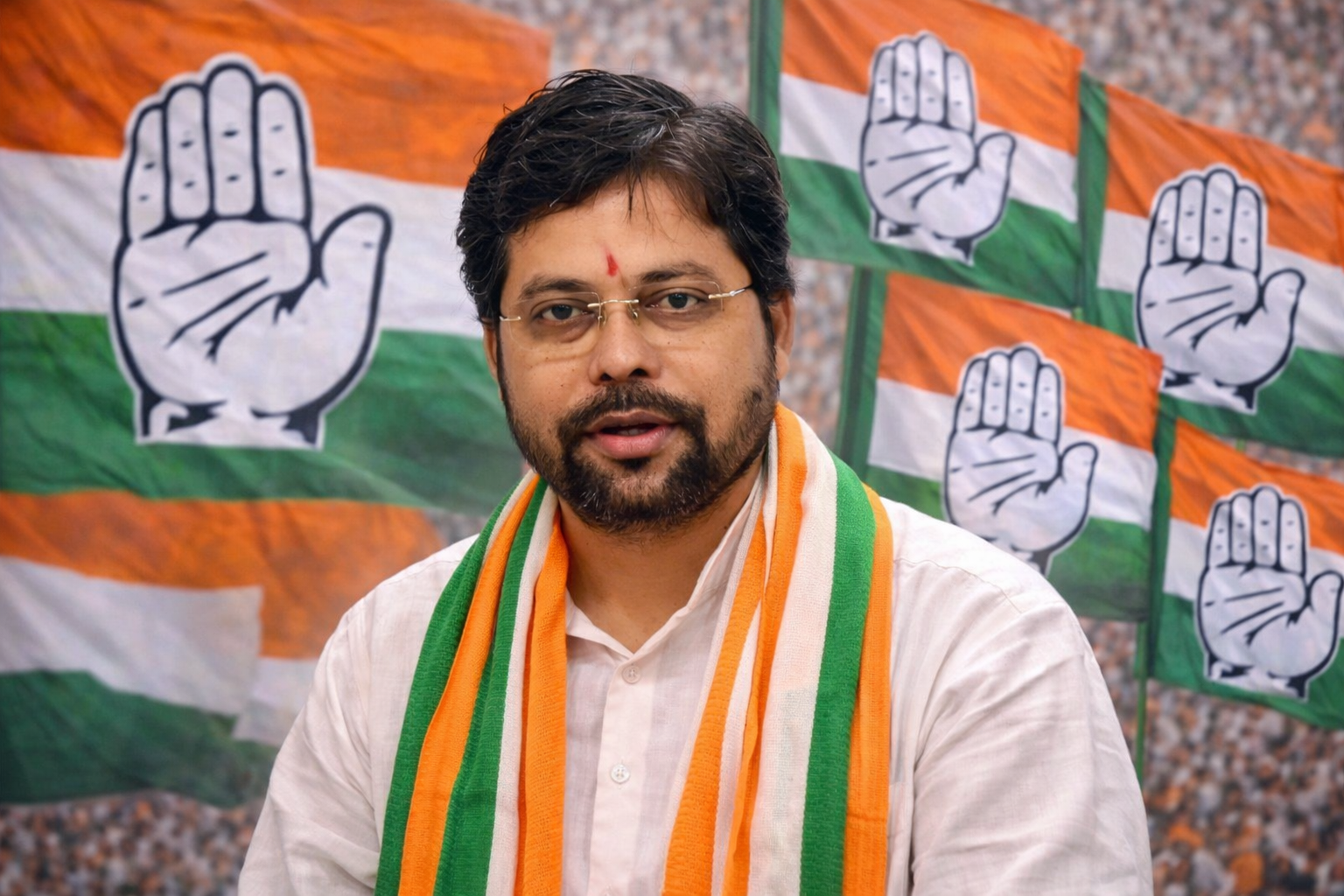
If Indianpoliticians.in intends to use this long-form profile, pairing it with primary visuals (campaign posters, field photos, and the profile photo against the party’s tricolour background) and a timeline of key milestones (founding Yuva Halla Bol, major campaigns, media milestones, and date of party induction) will help readers quickly grasp both the man and the movement. Embedding short video clips of signature speeches and a compact FAQ—clarifying his policy priorities, organisational structure, and immediate legislative goals—would convert long reading into actionable understanding for a digitally native audience.
Anupam’s arrival on the national stage is emblematic of a shifting political generation: one that sees activism and party politics as sequential rather than mutually exclusive steps. Whether he becomes a durable leader who reshapes youth policy in measurable ways will depend on his ability to build organisational depth, deliver local governance results, and adapt his activist instincts to the patient work of policy implementation. For now, his presence enriches political debate by keeping youth demands visible and concrete; how those demands are institutionalised will make the difference between an energetic interlude and a defining generational realignment.