Aryan Maan: The Making of a Future National Leader from Campus Politics
India’s democratic ecosystem has long drawn fresh leadership from universities, where debate, representation, and collective decision-making form the first training ground for public life. In this context, the election of Aryan Maan as President of the Delhi University Students’ Union (DUSU) in 2025 marks an important moment in contemporary student politics. Emerging from a highly competitive electoral process, his leadership is now being observed as part of a broader national conversation on the future role of young leaders in public institutions.
This profile is part of Indian Leaders – Future Voices, a series that introduces individuals from diverse organisational and ideological backgrounds who are shaping early leadership pathways in India, without political alignment or preference.
The Significance of DUSU in India’s Democratic Structure
Delhi University Students’ Union is widely regarded as one of the most influential student representative bodies in the country. With thousands of students participating across colleges and campuses, DUSU elections are often seen as a barometer of youth concerns, civic engagement, and organisational capacity.
Over the decades, DUSU has functioned not merely as a student body but as a leadership laboratory. Many former office-bearers have gone on to contribute to public administration, civil society, policymaking, and electoral politics. Within this historical context, the presidency of DUSU carries both responsibility and visibility.
Aryan Maan’s election in 2025 thus represents not only personal achievement but also the continuation of a longstanding institutional tradition in Indian public life.
Background and Entry into Student Representation
Aryan Maan’s rise within student politics reflects a gradual engagement with campus-level issues rather than an abrupt entry during election season. According to peers and university observers, his early involvement focused on academic coordination, student welfare initiatives, and organisational participation within the university ecosystem.
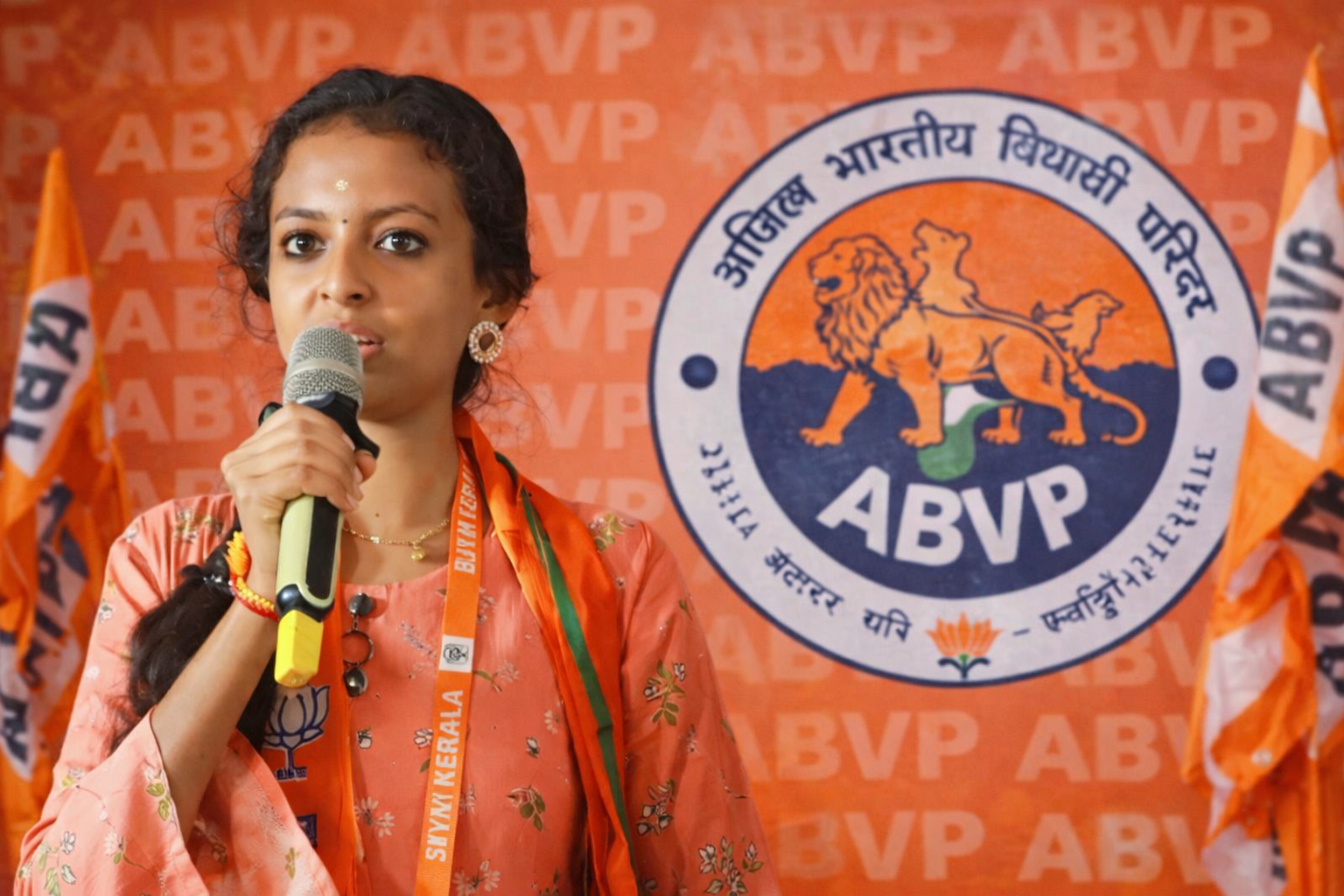
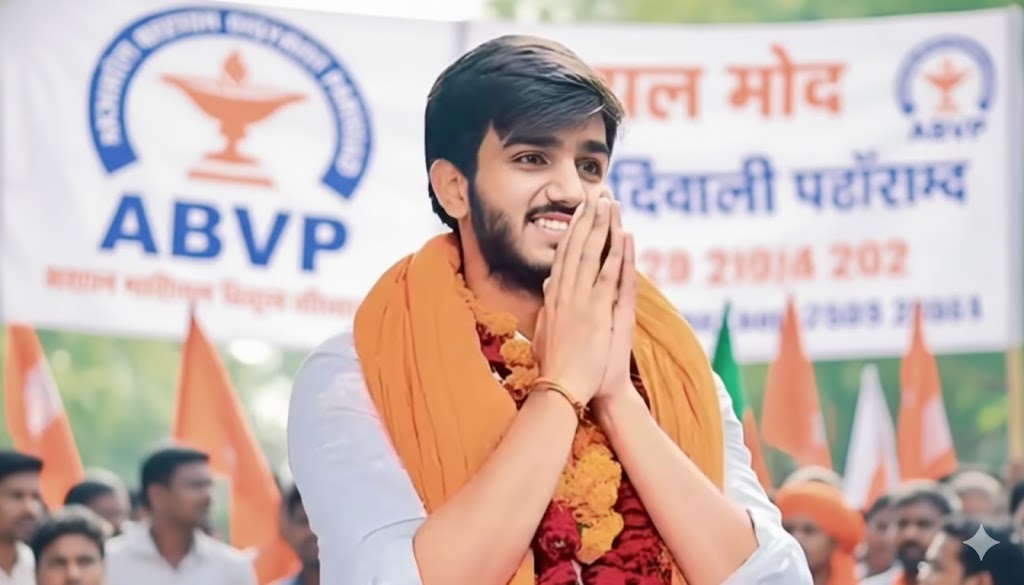
He contested the DUSU presidency representing the Akhil Bharatiya Vidyarthi Parishad (ABVP), one of India’s oldest and most widely present student organisations. His candidature came after several years of active involvement in student-centric programmes, discussions, and organisational work.
Importantly, his campaign highlighted institutional mechanisms—student-administration dialogue, academic support systems, and structured grievance redressal—rather than event-based or short-term agendas.
The 2025 DUSU Election: Issues and Environment
The 2025 DUSU elections took place in an environment shaped by post-pandemic academic transitions, digital learning challenges, and evolving expectations from higher education institutions. Students raised concerns related to:
-
Academic scheduling and evaluation transparency
-
Campus safety and infrastructure
-
Placement support and skill development
-
Mental health and student wellbeing
-
Access to administrative processes
Within this context, Aryan Maan’s campaign messaging focused on representation, continuity, and structured engagement with university authorities. Analysts note that the election saw relatively high participation, indicating sustained student interest in representative democracy.
Leadership Approach and Public Conduct
Observers of student politics describe Aryan Maan’s leadership style as restrained and procedural. His public addresses tend to emphasise collective responsibility, constitutional processes within the university framework, and constructive engagement.
Rather than positioning the student union as a confrontational body, he has repeatedly described it as an interface—connecting students, faculty, and administration. This approach aligns with a broader trend among contemporary student leaders who prioritise outcomes and institutional continuity.
Education policy experts note that such leadership styles are increasingly relevant in large public universities, where coordination and negotiation are as critical as advocacy.
Role of Student Organisations in Leadership Development
Student organisations, regardless of ideological orientation, have historically played a role in nurturing leadership skills—public speaking, negotiation, organisation management, and civic responsibility. Participation in these bodies often exposes young leaders to real-world governance challenges at an early stage.
Aryan Maan’s journey reflects this pathway, where leadership is developed through experience rather than appointment. His engagement with peers across colleges and regions has contributed to a broader understanding of student diversity and regional perspectives.
Beyond Campus: National Exposure and Dialogue
Following his election, Aryan Maan has participated in academic forums, student leadership interactions, and youth discussions at various platforms. These engagements have focused on higher education reform, youth participation in governance, and the evolving role of students in national development.
While he has not articulated any immediate plans beyond student representation, such exposure is commonly viewed as part of leadership maturation—providing context, perspective, and policy awareness.
Importantly, his public interactions have remained centred on student issues rather than broader electoral ambitions, reinforcing his current role as a representative rather than a political aspirant.
Expectations and Responsibilities as DUSU President
The presidency of DUSU brings with it high expectations from a diverse student population. Responsibilities include:
-
Representing student concerns before university authorities
-
Coordinating among multiple colleges and faculties
-
Ensuring transparency in student union functioning
-
Responding to crises affecting students
-
Maintaining inclusivity across ideological and social lines
How a president manages these responsibilities often determines both institutional effectiveness and personal credibility.
University observers suggest that Aryan Maan’s tenure will be evaluated primarily on outcomes—resolution of student grievances, communication effectiveness, and stability of the student-administration relationship.
Challenges in Contemporary Student Leadership
Student leaders today operate in a highly visible environment shaped by social media, instant public feedback, and heightened political awareness. Every decision is scrutinised not only by peers but also by wider audiences.
Additionally, student leaders must navigate ideological diversity on campus while maintaining institutional harmony. Balancing representation with inclusivity remains a persistent challenge.
These dynamics mean that leadership at the student level now requires emotional intelligence, communication discipline, and administrative clarity—skills increasingly relevant to public leadership at larger scales.
Youth Leadership and India’s Democratic Future
India is one of the youngest countries in the world, with a significant proportion of its population under the age of 35. The pathways through which young leaders emerge—student unions, youth organisations, civil society—play a critical role in shaping democratic continuity.
Figures like Aryan Maan represent this transition phase, where leadership is still formative but already influential. Their experiences in representation, negotiation, and accountability contribute to the broader democratic skill set of the nation.
From this perspective, student leaders are not merely campus figures; they are part of India’s long-term leadership pipeline.